HEROINE OF HER OWN LIFE Kindle promotion today through January 27 on all Amazon marketplaces, US, UK, EU. $0.99 to download. Visit http://mybook.to/heroineoholhc to purchase and to check out many of Next Chapter’s versions of the book. The sequel is in the wings, so download today!
Candy apple red—a color that joins the flame of fall’s reds, oranges and golds. Treats of this color reliably make their fall appearance in several countries as though the confluence of the apple harvest, Hallowe’en, and the UK’s Guy Fawkes/Bonfire Night (November 5th) predestined the bond of red sugar shellac and apple. Some weeks ago I noticed red hard-coated candy apples for sale in our local supermarket. As my father might have joked, “A free pair of dentures with every candy apple,” (if you can stand it, another of my father’s jokes may be found in the post, constancegemmett.com/the-4th-of-july)
Still, those candy apples drew my eye, the candy apple red color a beacon. The draw was one of nostalgia and not temptation. Nostalgia for my childhood, but also my youth, when we briefly owned a candy apple red 1966 Mustang.
As a child, my small choppers could not break their way in, so my father started the candy apples for me. Once he cracked the red shellac, I could access the rest.
Never saw candy apples with chocolate chips
At some point, I discovered caramel-coated apples. Easier to eat, the caramel apples were sometimes rolled in peanuts—delicious! My father then was relegated to eating his own candy apple, but I don’t think he indulged. Our ritual was the only draw for him.
It was hard to choose between the candy apples regardless, since the color candy apple red is both lurid and alluring. Some sort of fantasy of owning a candy apple red Mustang led us to buying a wreck of one in the very early 1980s. The car body was banged up—a dull version of its original glory. We bought the faded red 1966 Mustang for next to no money, which was fortuitous since I had none. Suzy and I were friends then. Friends usually don’t buy cars together, but the purchase, the ownership and the inevitable sale did bring us together.
Ford’s color swatches for the 1966 Mustang
I’d never driven a 225 HP V8 before and though our Mustang had it’s problems, lack of zip was not one of them. Getting it going was. We kept a plumber’s wrench in the glove compartment in order to bang on the solenoid. A few well-aimed smacks and the engine would fire up and if lead-footed on the accelerator, you were off to the races!
Reality set in during the month in which the Mustang had to pass a Massachusetts inspection. I’m sure they didn’t use the testing machines inspection sites do now. Regardless, the Mustang’s carbon output would have flunked any inspection, the inspector overcome by dizzying carbon monoxide fumes. Worse though was the fact—unknown to us—that the car just wasn’t…connected.
I had the bright idea to take it to an inspection station in the city of Chelsea, its reputation for corruption leading me astray. A ten dollar bill burned a guilty hole in my pocket. But as Sam Spade said in The Maltese Falcon, “Don’t be too sure I’m as crooked as I’m supposed to be.” The inspector wasn’t either. He was downright avuncular, lecturing me on the dangerous condition of the car. The chassis was not connected to the body of the car, just vaguely related. He finished with a flourish, affixing whatever sticker used to show every cop the car had not passed inspection. His last words a philosophical question, “Lady, if I pass this car, what car would I not pass?”
We parted ways, the inspector, Chelsea and I, the ten dollar bill still in my pocket, and I drove home to Cambridge. We decided the Mustang had to go, not actually being a roadworthy car. Suzy sold it to a young enthusiast for next to nothing. He did return the car to glory, but one day the ’66 Mustang—candy apple red once more—died while crossing commuter rail train tracks. The young man wisely fled to safety but alas, the train destroyed the Mustang, giving the weary commuters something to talk about. My guess is he forgot to smack the solenoid.
1980 spluttered to a halt just shy of forty years ago. 1966 ran out of gas fifty-four years ago. I guzzled my last candy apple more than fifty-four years ago. Apples seem as sweet as candy, so why flirt with expensive dental work? Candy apple red remains a lurid and alluring color—a promise of fun, adventure, danger—but at my age, the threat of danger puts a lid on the other two. No cars going around corners on two wheels for me, no Russian roulette with teeth. I have found a safe version of the Mustang in my dull brown, giant 2019 RAM truck. Put your foot down and it goes like gee whiz, the satisfying roar of the Hemi enhancing the experience.
Ford is rolling out an electric Mustang this year—bravo. Reported to be a small, peppy SUV (is the idea to compete with Tesla’s new SUV?), more utility than sport. Available in Rapid Red. It’s an attractive vehicle, but fuddy-duddy enough for those old enough longing for the ’66 version. ‘Tis a pity they didn’t name the color Candy Apple Red—
A beauty restored—the candy apple red 1966 Mustang
Readers of three years’ standing may remember a post that spins off from my volunteer job as the secretary of our local cemetery association to contemplation of our human struggle to appreciate our lives, www.constancegemmett.com/every-every-minute/. If not, it’s a suitably autumnal piece you may enjoy, pertinent to both our current state of affairs and the story below.
Last week I was fulfilling my duties as secretary by showing a couple the available cemetery plots for purchase. Masked and at a distance, we accomplished our goal, wished each other well, and parted company.
Today, I received an email from one of the pair, promising a funny story, which in part read:
“Constance it was great meeting you on Saturday. Thank you for facilitating our purchase. Here is my funny story…….. I like to read…and so I started…a reading journal a few years ago. Well now that I have retired, I have been reading a lot more and had a whole stack of books to enter. I started writing one in and I noticed that the author’s name was Constance Emmett. I had really enjoyed it ( Heroine of Her Own Life). I noticed the author’s name and thought ‘What are the chances……..?’ I googled the name and what did I come up with?”
The googling confirmed that the masked woman selling cemetery plots was indeed the same person as the author of Heroine Of Her Own Life, yours truly. Finding this a delightful coincidence, I thanked her for both telling me and for enjoying the book. Meeting someone out of the blue who has both read and enjoyed Heroine Of Her Own Life is sheer bliss.
My adventures in hair reached a new level yesterday as I applied cordless clippers in a fit of daring-do. The story could end here quickly with the word disaster—although possibly too strong a word—for what I have now is a puffy top with a shaved back. When I asked my spouse for her opinion, she pulled on the tail that drips down the back of my head and said dryly, “I don’t think cutting any more will help.”
My hairdo is a Davy Crockett hat, faux coonskin very popular with the children of the 1950s, thanks to the Fess Parker TV show. I never had the hat, but I coveted one, even though I didn’t like the show. As the King of the Wild Frontier, Fess couldn’t act his way out of a racoon den, and even Buddy Ebsen in the cast didn’t help. But I have the hat now.
Adventures in hair continue throughout life, although they first rage during adolescence when nobody—nobody I ever knew—was happy with her hair. I look at photos of the teen me now and wonder what I ever had to complain about. OK, the flip was not a good look for anyone, but it was the style, and it was a lovely color (real), a light brown with red and blonde highlights, and shiny. With absolutely no memory of who cut my hair in those days (not me, not my mother), I only remember tussling with my mother over the use of shampoo—my use too frequent in her view—and never thinking my hair looked good. My best friend ironed her hair to straighten it and while I watched her perform this amazing feat in awe, I was never tempted.
In youth, adventures in hair follow the fashions of the day. Long and free, curled, permed, teased and big, short, longer. Later, the adventures in hair become a little desperate, as we try and settle on the real us, our real look, just not such a middle-aged version. The color goes and we make the choice to dye, or not, and stick with that color, or not.
Still later, adventures in hair continue with the big question, what hairdo does an older woman look best wearing? The graceful ageing thing applies to hair as much as anything else, so the decisions should be based on grace. However, grace is not always easy to achieve, especially under fire. Does your hair proceed you down the aisle of age, or hang back a little?
Adventures in hair seep into my fiction. The characters obsess little about hair, but where appropriate (the young Meg in Heroine Of Her Own Life, for instance), they worry and change their hair. I describe the color, quality and styles of the characters’ hair, including facial hair. The characters age, and their hair ages and is transformed over time, too. In 1922, Meg and Mary take steps into the modern world and have their Victorian hair bobbed.
During World War II, everybody has more pressing things to do than worry about hair. This is true in Heroine and in the sequel under production. To save time shaving on board a Royal Navy ship and irritating his skin, Meg’s nephew Robert grows a beard. Meg’s brother David grows a beard to save hot water. Lillian’s chestnut hair becomes silver-streaked and she wears it up, often full of pencils as she works at Stranmillis Typing. Meg’s russet hair remains short, while Annie, living in America during the war, wears her silver hair in a bun. In the late 1960s Lillian’s nephew Albert grows bald, but he cultivates long sideburns as compensation. Hair styles say as much about fictional characters as our own follicle arrangements say about us. https://www.constancegemmett.com/online-independent-bookstores-now-selling-heroine-of-her-own-life/
The pandemic took my adventures in hair to another level, even before the fatal cordless clipper purchase. Like everyone, I found myself in a needs must situation after my last professional hairdressing in March. Through July, I hadn’t the slightest inclination to be two feet away from five people (mine plus two other hairdressers and their clients), blow dryers blasting, our droplets swirling in the air. The last hair cut lasted for a good long time, but the color began to go. I let it, even though that would have been easy to fix. My hairdresser decided the pandemic was a good time to retire. The last link to an appreciated professional gone.
A few You Tubes later, I gave it a gentle trim with a small pair of scissors. Pleased with the result, I gave my hair a second trim a few weeks later. Nothing adventurous. Going for grace. Going, going, gone—I ordered the clippers, courting disaster. Once the clippers arrived, I summoned my courage and stormed the bathroom mirror well armed.
So what happened? An adventure in hair! The clipper kit included color-coded guards for the business end. The instructions listed the guards by the portion of inch they represented. After swooping at the back of my head with the smallest guard, 1/8″, I stopped. The amount of hair coming off was rather long. Apparently, I had confused the 1/8″ as the amount CUT, rather than the amount LEFT on the head. At least I started in the back…so, I am left with a David Crockett. At some point I’ll figure out how to ameliorate this hairdo, and enjoy yet another adventure in hair! Or I’ll just let it grow.
Members of the UK Naphill Alternative Book Club Zoom-interviewed me last week after reading HEROINE OF HER OWN LIFE. It was a wonderful experience since the women asked many insightful questions about writing and publishing the book, and also about the back stories, including mine. The book club members joining Zoom had high praise for HEROINE OF HER OWN LIFE and seemed to have enjoyed reading it—my head swelled—but my favorite comments were by Olly, a Belfast native, who commented that the novel’s language was perfect and “Thank you for taking me home.” Higher praise I could not wish for…Many thanks to neighbor, friend and book club member Peggy for setting this great experience in motion. Cheers, ladies for a wonderful experience—looking forward to sharing HEROINE’S sequel with you soon!
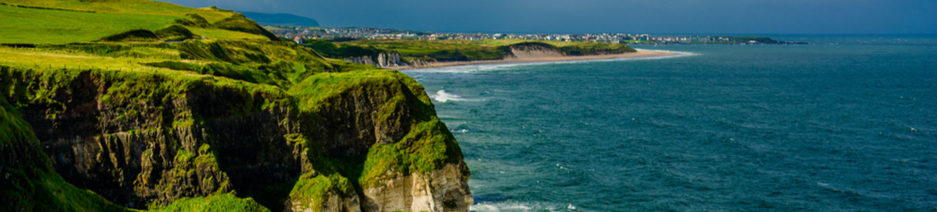
Naphill Alternative Book Club members visit their much-missed American sister, PeggyBook club members enjoying a glamorous eveningPortrush, Northern IrelandThe Lagan River, Belfast, Northern Ireland
As the month draws to a close, it’s time to reflect on the glory that is June: the dazzle of bright green leaves in the sun and warmth after a long winter, which in Western Massachusetts can have plenty of gas left in May. The palette of May includes the range of daffodil yellows, syringa lilac, the dull green of asparagus shoots, the electric green and red of male hummingbirds, and often the white of snow. All the more glory left to June.
The garden seems to peak in June, just as the heaviest work in the garden recedes and ticks over into maintenance until fall. Here in the foothills of the Berkshires we see the first blooms of summer in June—orange, the full magenta range, fifty shades of white—and the first full leaves on trees. In June we begin to dine on the lettuce, peas, scallions, and herbs we planted, fingers crossed, after the last frost (or in the case of asparagus, the bed we planted years before).
As the month wanes, the glamorous peonies are ruined—ripped down by heavy and much-needed rain. The lupine flowers are past, the furry fat seeds left waiting to disperse. Irises, so perfect in their sharp blue, are long gone, leaving the spears of leaves to point skyward. A few of the roses, which bloom first in June, are now in need of a thorough deadheading and another round of soap spray.
June and the garden is in!
First bloom, June
The garden doesn’t really peak in June—it’s an illusion conjured by winter-weary eyes—the plant succession continues. The bee balm has not bloomed yet, nor have the rudbeckia and Asiatic lilies. The tiger lilies are opening, so are the clematis vine blooms, and the drifts of milkweed, ready to host the Monarch caterpillars, rise above the rest of the grasses and clover in the field.
Lupines in the field, planted for pollinators, mid-June. A wary bumblebee had just flown off…
The garden is beautiful for the rest of the summer and into late fall, as are the hills that wrap around us. Butterflies arrived earlier in June, but soon the little gardens and field planted for pollinators will teem with them, vying with the moths, bees and hummingbirds for purchase on the tempting flowers. As they feed, the days will grow shorter, until the sad day arrives when we realize they’re all gone: hummingbirds, Swallowtail, Fritillary, Monarch butterflies, and their migratory avian comrades. As we put away the garden tools and deck furniture, our attention will turn to setting up the bird feeders (after the bears go to sleep) for our stalwart winter companions: juncos, chickadees, cardinals, titmice. Their colors and habits will entertain and intrigue us all winter, along with those of the deer and rarely, bobcats and foxes.
Monarch butterfly feeding on rudbeckia, September
We will continue to revel in the glory that is June for the last two nights, when the lightening bugs offer love in blasts of light, under a starry sky or in the rain. June gives us hope in the little green tomatoes, flowering potato plants, the fuzzy little tops of carrots, miniature beets, parsnips and Brussel sprouts. The young fruit trees are covered with tiny cherries and apples. June is the sight of cucumbers, zucchini and pole beans growing before our eyes, like time-lapsed photographs, onward and upward. No terrible pestilence has befallen any of the vegetables yet, no critter has ravished them: it’s June.
Despite everything, will it be a good summer after all? Here, in June, it feels like one, as we sit on the deck overlooking the field, thinking of nothing, gazing at the glorious greens, absorbing the buzz and clicks of the hummingbirds, the perfect air, the rest of the world shut out—that is the glory that is June.
In a pandemic, retirees know what to do: how to get through the days, the weeks, the months. Your first thought about retirees may concern the age demographic’s susceptibility to the disease, and while present and frightening, that does not erase our competence during the pandemic (as long as we remain uninfected, but that goes for everyone).
The competence of retirees in a pandemic is this: the ability to impose structure where there is none imposed.
Self-isolation/quarantine/lockdown in the face of the Covid-19 pandemic is the responsible course—just as thorough hand washing and mask/glove wearing in public are—it’s the only course until there is a consistent decrease in infection over time, and ideally, a proven vaccine and treatment available. The internet and newspapers are filled daily with suggestions for how to survive in isolation: what to cook, how to entertain ourselves, what to read and binge watch. Learn a language! Write a book! Learn to dance! Draw! Zoom a Zumba class! Clean the closets and repair those frayed hems! Like these are new ideas for occupying oneself. Hey, retirees, we’ve got this!—a loathsome phrase, but we really do.
So in the spirit of helping fellow humans who have not retired yet—folks who are quickly losing it, according to the internet and newspapers—here is a list of 10 to-do’s to help you stay sane, healthy, productive, svelte, and sweet smelling for whomever is locked up with you. Non-retirees: read and learn.
Get out of bed. In the morning. It’s a big step, but think about the lure of coffee or tea, whichever you prefer first thing in the a.m. (bourbon does not count). If you are sleeping poorly, take a nap in the afternoon, but get up at a reasonable hour in the a.m. And make the bed.
Take a shower. It’s allowed to touch your face while washing it. Wash your hair. Hair (cutting and coloring) is a serious problem now, unless you are a hairdresser or are locked up with one (warning: do not allow your non-hairdresser partner to cut your hair; cut it yourself and take the blame)—the least you can do is wash it. Moisturize in order to maintain the barrier that is healthy skin. Wash in the evening or the morning, whichever is your preference, but wash. Regularly.
Get dressed. Don’t lounge around in pj’s or underwear or some cringe-worthy combo of same. Or worse yet, a bathrobe. Put clothes on, even if it’s a “track” outfit. Pretend you are going out (more on that later in the list) or answering the door (ding-dong!) and you have to meet and greet someone. When Zooming with your boss, family or friends, wear something appropriate on top but don’t succumb to wearing something unreasonable on the bottom (in an emergency, you might forget and jump up, and you’ll never, ever live that down). For heaven’s sake, change your clothes for clean ones on a regular basis. If you are unlucky enough not to have a washer/dryer in your home, this makes things tougher, but washing by hand is possible and the activity will soak up many hours. Think of how life on the prairie was for the settlers.
Don’t spend all day and night on the internet. If you have to work from home, first, count yourself lucky to be employed, but don’t log out of the company account just to turn on the gambling channel, Facebook, Instagram, Googlezon or Twitterpin. It’s better for your brain and your eyes to resist the screen for some portion of each day. So yes, read, cook, clean, exercise without a screen on—all good suggestions, even if they are posted on the internet as pandemic activities.
Don’t sit all day. Sitting has long been described as the new smoking (don’t do that either) because it’s so detrimental to your health (starting with your rear end). Get up and move around, doing one of the many aforementioned actions: cooking, cleaning, exercising, dancing around like Gilda Radner on SNL (you’re allowed to YouTube it). Just get up every hour or so and move. As retirees know well, joints tend to stiffen with age, but even young joints benefit from the hydration increase caused by movement.
Go outside. As long as you are not under actual lockdown, go out, get some air. If you are under actual lockdown, stick your head out of the window. Most cities, states and countries allow for some outside time: walking the dog, walking or running oneself, even if the time and distance are limited. Grocery and pharmacy shopping are included in these permissions, but while necessary, shopping is so stressful that it is not a listed recommendation.
Don’t eat or drink too much. This pandemic is extremely stressful, and there’s no arguing with the pressure of that stress. Eating and drinking too much are fairly common responses to stress even now, when planning a shopping trip is on a level with the planning of D-Day. Find some other way that isn’t bad for you to relieve stress. The YMCA does provide loads of online courses, including yoga and meditation—whatever—find a path between the virtuous and utter degradation—enjoy a cocktail of any sort and rant and rave at the news channel of your choice, for instance (certain retirees have been doing that for at least 3.5 years). You’ll think of something.
Clean the house. OK, nobody ever comes over anymore, and if they did, you’d tell them to go away. The FedEx and the UPS guys (why are they never women?) are the closest thing you have to visitors, and they don’t get past the front door. The tendency is to become a tad…disinclined. As all retirees know, this must be nipped in the bud! Clear up the clutter. Don’t leave dishes in the sink. Above all, clean the bathroom, but vacuum too. It’s pollen season.
Make a to-do list. Even if you don’t get through all the items, it will keep you attached to the world, and you may actually get some things done! It will beat back the chaos inherent to the universe, at least for a little while, and will focus your mind. The isolation has cut you off, you are adrift. All retirees know better than to let that happen. Anchor yourself to the tasks only you can do!
Be grateful. If you’re stuck at home, you’re not on your way to your dangerous job in a hospital, fire station, nursing home, grocery store, delivery vehicle, police car, post office or garbage truck. If you’re stuck at home, odds are that you are pretty healthy. If you’re pretty healthy, be grateful. Stay grateful and healthy.
Heroine Of Her Own Life is available through Bookshop www.bookshop.org ($13.99), where you can search for bookshops in your area, book titles, and authors. Now more than ever it’s important to support independent bookstores. Grateful for friend Peter’s eagle eye finding Bookshop and for their efforts.
From the Bookshop home page: “Buy books online. Support local bookstores. An online bookstore that financially supports local independent bookstores and gives back to the book community: $727,644.98 raised for local bookstores.”
A shout out also to A Room Of One’s Own Books www.roomofonesown.com in Madison, WI, independently operating since 1975. Closed as a walk-in bookshop/event space for now, but operating by mail for the foreseeable. Heroine Of Her Own Life is available here too ($13.99 paperback and $17.99 large print). In normal times, the bookstore also hosts many events and provides important community safe space. A Room Of One’s Own website offers an easy way to donate toward their survival.
Old-fashioned glass syringes, right out of the autoclave
Two-year-olds in the early 1950s were given vaccines by glass syringe for the bacterial diseases diphtheria, tetanus (commonly, lockjaw), pertussis (whooping cough), and for the viral disease smallpox. There were no other vaccines available.
Parents in the early 1950s gave their children dimes destined for the March of Dimes drive to develop a polio vaccine. Generations of parents worried and waited anxiously for the summers—the time of highest infection rate—to pass. The peak of the polio epidemic in the U.S. lasted from 1916-1955, with the highest mortality rate in 1952. For the Great Depression-World War II generations, President Franklin Roosevelt, in office from 1933 to his death in 1945, was a living reminder of the permanent paralysis left by polio (although it is postulated now that he actually suffered from a severe form of Guillain-Barré syndrome, an autoimmune disease of the nerves with polio-like symptoms, for which there was no cure during his lifetime).
Finally, in 1955, Jonas Salk’s vaccine, one made from killed virus, was approved. Americans were vaccinated, but some of the children afflicted during the 1930s, 1940s, and early 1950s are still living now with the effects of polio.
As the march to eradicate polio proceeded (succeeding in this country only in 1979), children of my generation were still susceptible to a succession of the viral diseases for which there were no vaccines: measles, rubella, mumps, and chickenpox. Penicillin became widely available near the end of WWII, and so bacterial diseases pandemic through the early 20th century such as scarlet fever dropped in prevalence and mortality.
Unless my blood was drawn today to detect and measure the level of the antibodies I produced against these viruses, I can’t be sure that I experienced all of them. One exception is chickenpox, which reappeared as shingles at age fifty. However, I’m fairly certain that I was sick with measles and/or rubella (so-called German measles), mumps for sure—unforgettable because it was so weird—and as noted, chickenpox.
More than one caused fevers so high that I hallucinated. Vases rose up and down in the air, my mother’s head became the size of an orange (she didn’t seem to notice). Describing these imaginary events alarmed the adults in the room, but the hallucinations were the one interesting thing about enduring illnesses that brought excruciating rashes and painfully swollen glands; days as miserable as they were long.
Luckily, all of the illnesses passed, leaving me an energetic little kid again, but they often started the same way, too. Waking with a painfully parched throat, I’d ask my father, who always rose very early, “Daddy, could I have a glass of water?” He brought the glass of cool water to me and both the act and the water brought some comfort.
That childhood memory brings home how awful it is to have a viral illness and to be alone, as so many around the world are now. So many sick enough with Covid-19 to be hospitalized, sick enough that their families can’t be near them, sick enough to be unable to swallow water. A high number are sick enough to die alone, or with strangers, however caring the nurses and doctors, inadequately protected and succumbing to the disease themselves.
Waves of Covid-19 will continue to wreck lives for some time, until the vaccine and treatment are available, until immunity is established. Covid-19 has ripped off the slipping mask underneath which lies our country’s inequality. Health care access, access to jobs able to provide homes, food, education, safety and security: there are the very rich and the rest of us fall into some level of relative poverty and dependence on a Swiss cheese social net.
The Covid-19 viral outbreak has knocked many Americans off their perches, ones they may never recover. We all hope that many, many lessons will be learned from this pandemic, which caught the U.S. absolutely flat-footed; we always hope in a crisis.
I was lucky to have vaccines available at age two, penicillin to treat scarlet fever, the polio vaccine a few years later, and relevant vaccines available later in life. In those years, talented researchers and a supportive government insisted upon vaccine and drug development. In recent years though, an anti-science surge has become seriously embedded in our culture, especially with supporters and members of the current administration, allowing a pandemic the time to pull us fully into its maw.
There are people in this country who believe that vaccines are harmful, who insist on causal relationships between vaccines and certain medical conditions, no matter how many studies prove otherwise. They ignore the fact that Americans suffer little or not at all from measles, rubella or mumps—serious illnesses in many children and most adults—thanks to vaccines.
The lessons of the earlier centuries are unknown to the anti-science crowd, the anti-vaccinators, even as we all live through a very hard lesson now.
Blaise Pascal, 1623-1662. “All of humanity’s problems stem from man’s inability to sit quietly in a room alone.”
Use of the word “unprecedented” is in overdrive these days, as many have complained, including the journalists who lean heavily on it when describing the Coronavirus Covid-19 pandemic. A quick turn around Roget’s Thesaurus doesn’t offer good alternatives. Phrases like “not seen before” and “unheard-of” are awkward, and using the word “novel” brings the writer or speaker up against the description of the virus modern humans had never experienced until now.
The amount of anxiety, danger, and suffering in the world now is not unprecedented: there are people still alive who suffered terribly during the last world war and the last viral plagues, as had so many throughout human history. Nevertheless, Covid-19 brings the spectre of ruin, illness, and imminent death to everyone on earth right now, including those whose jobs include researching, treating, preventing, ameliorating, interpreting, and reporting on the dire effects of the virus.
Many of us don’t fit into any of those categories, and we are doing our bit only by staying home and keeping ourselves to ourselves. The glimpse we are now allowed into journalists’ private lives—along with those of experts, pundits, officials, and politicians—as viewed on MSNBC, CNN, and the networks is unprecedented. Fox News studios are operating in a pre-coronavirus-three-anchors-one-foot-apart-on-a-sofa mode, but those who appear on MSNBC are interviewed and interviewing from home via Zoom or Skype, and while asking or answering, the television or live-streaming audience is checking out their home decor.
The civilian self-isolator has become a voyeur—a viewer in every sense; the professionals the spied upon. Mostly we see their home offices, situated in dens, basements or attics. Often we see their living rooms. Rarely do we see other rooms, although we now know that former Senator (D, MO) Claire McCaskill enjoys a cheerful and well-appointed kitchen. New York (D) Governor Cuomo makes frequent televised/streamed updates from the Executive Mansion, but not the private quarters. However, we have learned through these updates that he lives alone and has become annoyed with his dog in their isolation, but this page tells a different story: https://www.governor.ny.gov/news/governor-cuomo-wishes-first-dog-captain-happy-second-birthday (it is worth noting that every self-isolation order in the U.S., UK, Europe, and Japan allows time outdoors for dog walking).
Matching the color schemes or decor to now-familiar journalists’ homes would have been no easy feat, but now we can. Journalist Heidi Przybyla’s muted and elegant gray living room suits her perfectly, both her cool beauty and her sardonic undertone. Maryland (D) Senator Ben Cardin’s bookshelf is full of trinkets and dolls—a surprise. The bold colors of the paintings and pillows in journalist Kimberly Atkins’ living room suit her sparkle. Journalist Peter Baker, former VP Joe Biden, historian Jon Meacham, and many others are interviewed in front of large, overstuffed bookshelves in home studies or libraries.
We see their potted plants and flowers in vases. We hear their dogs bark (Atlanta Mayor Keisha Lance Bottoms did not crack), and the shushing of an unseen human.
The ear plugs and microphones used at home vary interestingly also. There are white and black versions planted in ears like the children of a marriage between an earring and a sci-fi hearing aid. Lower tech versions are embedded in the home computer, limiting the users mobility. Still others use lanyard combos of ear plugs and microphones that dangle and distract (users can’t keep their hands off of them).
MSNBC political show hosts are self-isolating too, but they have taken some token of the studio decor with them. Nicolle Wallace (full disclosure: we watch her late afternoon Deadline: White House, after spending part of the mornings plowing through 5 newspapers between us online) claims to sit in her home basement for the broadcasts, behind a desk and in front of a White House wallpaper backdrop. Chuck Todd (MTP Daily) also sits in front of Washington wallpaper, one sporting flowering cherry trees. Everyone, including Andrea Mitchell https://www.constancegemmett.com/what-would-andrea-mitchell-do/, broadcasts in front of a world map highlighting the Covid-19 hot spots in red and orange circles, large and small.
Still, there are reporters out and about, putting themselves at great risk: last week MSNBC’s Garrett Haake continued to roam the corridors of the Capital Building, as did members of Congress called to an in-person Coronavirus Relief Bill vote by Thomas Massie’s (R, KY) objection to safe distance voting. White House correspondent Yamiche Alcindor presses forward with her questions, despite the president’s constant and abusive silencing—his unprecedented abuse of the media. Rehema Ellis shows us the worst coronavirus stories in New York City to highlight the high mortality rate and the danger to healthcare and funeral workers operating without adequate protective gear (nurses at Manhattan’s Mt. Sinai Hospital have taken to making gowns out of Hefty garbage bags—an unprecedented situation). She’s out in the streets showing us the truth of the situation, in stark contrast to the daily smoke of the happy version of events blown by the White House.
Reporters televised at home, in the streets, and in the halls of power seem to reveal more of their humanity during this plague time. It may be the viewer who imagines it (dogs barking and potted plants help), or that the vulnerability they feel is palpable and shared by us. The health care and emergency workers, now accused by President Trump of selling face masks to a “black market,” are the shining heroes, but we should be grateful to the “fake media,” our beleaguered doctors, governors, and mayors for telling the truth on a daily basis.
While quietly sitting alone in his room, Pascal wrote: “Truth is so obscure in these times, and falsehood so established, that unless we love the truth, we cannot know it.”