Lost Dog

I became  involved with  a lost dog earlier this month. First, I saw the poster in the general store window. The photo, the dog’s name, date and location last seen, and the owner’s phone number. It broke my heart.

Lost Dog, Lost Cause

A lost dog is considered a lost cause around here. Too many coyotes, bears, fisher cats, logging trucks—all waiting to end the lost dog’s days.

A day later, I met the owner on the road where she’d lost the dog. She told me that the dog pulled out of her grasp to chase deer at the end of the field. The dog still had her leash on. The owner was in agony.

Leashed Lost Dog, Doomed

A lost dog wearing a leash is doomed. The leash gets snagged and the dog is stuck. Visions of tethered goats come to mind.

Arthur And I Go Into Action!

The next day I leashed my dog Arthur, packed water, and dressed like I was on some sort of gardening safari: hat, long-sleeved shirt, long pants, high boots, gloves, all doused in insect spray. It was very hot, but I knew we were going into rough terrain to look for the lost dog.

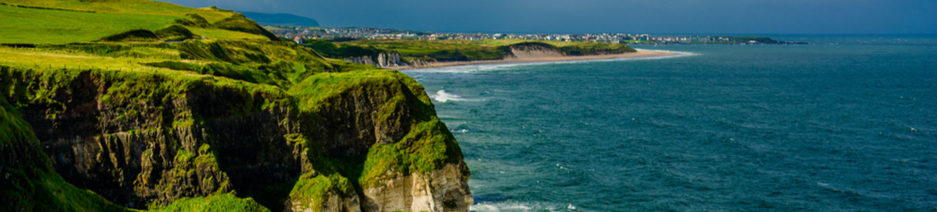
Behind the field where the lost dog was last seen, behind our friends’ house, looms a very large and wild place called Forge Hill. First we drove the length of a rough dirt road that traverses the area. I drove slowly, called the dog’s name, and stopped to listen. After that we parked back at the field and began the hard part of the search. Crossing the field was not as easy as I’d imagined, but what lay beyond it was so much worse.

My thinking was that if the lost dog was snagged on her leash, she might still be alive and not too far into the woods, especially if she was near the river that runs alongside and could access water. Alive or not, I thought it would be better for the owner to know.

What On Earth Were We Doing?

Arthur and I plunged into a swamp full of brambles. We scanned the river’s edges. We turned and began the ascent into the forest, littered with cut logs and dead branches—a very difficult climb already. I called the lost dog’s name. Going forward seemed hopeless. Going backwards seemed worse. I decided to go up.

The Ascent

It is no exaggeration to write that “up” was a 45-degree angle, littered with cut logs and branches, but also with plenty of standing and thin trees to grab at intervals. At the top, if we could climb it, we would be rescued by our friends’ flat, clear property. We climbed.

Arthur and his four paws pulled me and helped at crucial moments. However, he was hot and tired, and at times tried to go back down. He sat down and gave me a look. I grabbed a small tree, hoisted myself up and leaned on it while he rested.

Halfway up it occurred to me that while I’d done this kind of nutty, adventurous, and  challenging thing often in my childhood and youth, I was well beyond all of that now. Or I should have been. Yet here we were, halfway up.

Past Halfway

Closer to the top the ascent became impossibly steep and I followed Arthur’s lead and dropped onto my hands and knees. Arthur may have recognized our friends’ property, the smell of it, or he decided that he was going to pull me up and be done with this insanity. Visions of broken legs and another lost dog, lost woman, danced in my head.

Saved

We arrived at the top and while I was thrilled, I was very happy nobody saw my ignominious arrival on all fours, sweating profusely, dressed like a gardener at V. Sackville-West’s Sissinghurst.

Our reward, besides an uninjured continuance of life, was a lovely bench. I hadn’t any idea that our friends had placed a wooden bench close to the cliff’s edge, but there it was. Gratefully flopping onto it, I pulled a water bottle and a collapsible dog bowl out of my pockets, and Arthur and I shared a cool drink.

Welcome

While our friends placed the bench in this lovely spot for their own reverie and relaxation, it felt like they’d put it there just for us, for our revival, our welcome. We sat there for quite a while, gazing down at the river (a long way down) and up at the mountain across from this spot.

Rousing ourselves, we walked the length of the cliff’s edge, while I called the lost dog’s name. I’d felt sure that Arthur was going to find the lost dog, but he did not. We’d kept ourselves from becoming lost, but the bench saved us.

Lost Dog, Not Doomed

A few days later, I returned to the general store. The lost dog sign was gone. The lost dog had been found—hungry, but OK. Not all lost dogs are lost causes or doomed. Not this lost dog. It was one of the best pieces of news I’ve had in a long time.

The 4th of July

“He who drinks a fifth on the fourth, does not go forth on the fifth,” was one of my father’s favorite jokes. The 4th of July always reminds me of my father, but this year, I am thinking of his family, going back generations. My nostalgia may be because the 4th of July is such an old-fashioned holiday, the ultimate American one, and for me, both describe my father’s family. The joke also contains the word used to describe a defunct liquor bottle volume: a fifth of a U.S. gallon. The word used in that way also reminds me of the family.

Tales of the bond boy

As a child, I was much closer to my mother’s family than my father’s. Besides my father, the only one in his family whom I knew well was the younger of his two sisters, Kate. Aunt Kate made herself a constant in my life. She told me that the first Emmett to arrive on these shores was a bond boy—an indentured servant—sailing from England to Philadelphia in the 18th century.

Daughters of the American Revolution, here I come

I tucked that nugget away for many years before pursuing it. Aunt Kate also told me that someone in the family fought in the American Revolution, which seemed more interesting to me at the time, not to mention more seemly to my snobbish little self.

An interest shared

When my father was well entrenched in his long, last illness, I researched both sides of his family. We corresponded about them: I asked if so-and-so could be part of the family, he replied with the information he remembered. I wrote by email via my techie mother, he wrote letters. The reward was much easier communication than we’d shared in my life. After years peppered with silence and anger, we were talking easily at last, even though he could no longer actually talk.

The bond boy found

I found the bond boy on a ship’s manifest: one Henry Emmett. Captured in The Complete Book of Emigrants, 1751-1776, by Peter Wilson Coldham is the description of Henry’s indentured state, the voyage, his name, origin, age, and occupation. The bibliography is as follows: “A comprehensive listing compiled from English public records of those who took ship to the Americas for political, religious, and economic reasons; of those who were deported for vagrancy, roguery, or non-conformity; and of those who were sold to labour in the new colonies (Baltimore: Genealogical Publishing Co., 1993).”

A miserable trip

From February 27-6 March 1775, Henry Emmett was on board a ship sailing from Bristol, England to Philadelphia—the HMS Salty—to fulfill a binding contract owned by a Mr. James Russel. Henry is listed as hailing from Bath, England, aged 32, and a saw maker. Several other indentured fellows sailed with him, and their names and occupations are listed. Sharing the frigid voyage was an indentured woman, listed as “A woman.”

The 4th of July, 1776

Henry Emmett arrived in colonial Philadelphia in March, 1775. On the 4th of July, 1776, he stood on the streets of a new nation. He was an ordinary person, probably with little education. What did it mean to him? Was he able to escape the bond that brought him across the ocean? Did he wish to return to England, or was did he want to stay?

My ancestor?

Other than his surname, what evidence do I have that Henry was my ancestor? He was a saw maker: an occupation carried down the generations to my own Grandfather Emmett. By the taking of the 1790 census under President George Washington, Henry was still living in Philadelphia with his wife and children. Henry was “the head of the household.” The male children were described as “free white males.” The women and girls were not described other than their number.

Same job, same neighborhood

In addition to the generations of men in my family who worked as saw makers, from Henry’s time the Emmett family continued to live in the same neighborhood of Philadelphia: Kensington, where my father and his sisters grew up.

Why indentured?

Why was Henry Emmett indentured? He had an occupation, so I assume that he was not a vagrant. Was he a rogue? a non-conformist? Did he sail for political, or religious, or economic reasons? Even though he might have been a rogue in England (and that has a certain appeal for me), my money is on economic reasons: he carried debt he could not pay.

One and the same person?

Whatever he was in England, once free from his bond here, he settled into colonial Philadelphian life. After the American Revolution, he maintained his life in Philadelphia as a family man. In between, did he serve in the American Revolution? Was Henry both the bond boy and the soldier in the American Revolution of Aunt Kate’s tales?

Fodder for the fiction writer

My research will continue by studying indentured servitude, Mr. Coldham’s compendium, and the rolls of Pennsylvanians who served in the American Revolution. I’ll pour through the census pages from Henry Emmett’s time until I see the link between us. I’ll take it up again because I write historical fiction, and I have an idea about how to use this research: this story is fodder for a fiction writer.

Rare merriment

There’s nobody in my Emmett family to share this information with now: I’m an only child with no children, my father’s sisters had no children, and my father has not been alive to celebrate the 4th of July for fifteen years. Still, I can hear and see him declaiming the cautionary joke about drinking a fifth on the fourth with a rare look of merriment.

The Children

They’ve been much on our minds, this week, the children. Children detained together in cages, frightened. I’ve heard the same party line that you have, from officials who have not visited the detention centers: that the children are well cared for, that it is the law to separate the children from their parents, that they and their parents are infesting our nation, that their parents were sent here because they are criminals. I’ve seen what you’ve seen: desperate women and men forced to hand their sobbing children over to an uncertain fate.

An Act of Desperation

What is it about the children and their parents that some Americans hate so much: their color? their poverty? their language? their desperation? Check, check, check. Whatever we are told about them—their many crimes, their gang affiliations—one thing is certain: they are desperate, and some Americans don’t care. They’d have to be desperate to pay the unscrupulous coyotes to guide them on a perilous journey with their children; a journey with an uncertain and dangerous end. The end is indeed dangerous for the children and for their parents: they may never be reunited.

Reunion?

The question of reunion never seemed to enter the official mind. The parents detained or turned back don’t have the same ID as the children. The children are being sent all over the country. The parents are poor people with no clout and little English: how will they find their children? Who will help them?

Officials now are arguing about the creation of tent camps to house entire families gathered up at the border. The outcry about the ripping of the children away from their parents has created an official solution: incarcerate everyone. “There,” they seem to say to the people of this country, “happy now? The children will stay with their parents, so shut up.” No, not happy. What happens to the families in the tents? Do they stay there forever? Are they interned until the parents are old and the children have their own children? What is the government doing in our names?

History disagrees

There’s been much talk about how we are no longer the nation we thought we were. Thinking about our history, I would have to disagree. Sadly, and in the 21st century, we are showing ourselves to be the nation we’ve always been. There are not too many people of Native American, African American or Latino American ancestry in the president’s base, just because of the attempts at extinction and the injustices they’ve suffered at the nation’s hands, at the hands of those in power who hate them.

Jewish and Italian immigrants were ghettoized once they reached Miss Liberty’s arms, and the Irish escaping famine were mistreated in 19th century America. Japanese Americans were put into internment camps during World War II, their homes and businesses confiscated and never returned. The U.S. government turned away ships of escaping Jews on the cusp of the war, and never participated in the British program of offering asylum to the children after their parents were taken to concentration camps in Germany, Austria, Poland, the Czech lands.

Shameful

Over three centuries, the ones who immigrated to these shores from Europe hated the others, saw them as other, brought their slaves, and grabbed the power, the land, and liberty of others’. To modern eyes, that shameful history worked its way into our consciousness as wrong in the middle of the 19th century and seemed on firmer ground in the 21st century. Our nation has regressed over the years just as much as it has progressed, but our hatred of people of color, of poverty, of otherness has erupted again. Was that animus stewing in the DNA of Americans who approve of these detention camps? Do they see desperate people fleeing to our border as an infestation? Was I wrong to hope that this hatred was gone for good?

Helping the children

The president did not win the popular vote, but he did win the election because of the eruption of hatred and despite the many Americans of good will. The people of good will have few routes to helping the children now: voting, protesting, disobeying, and demanding that those who represent us and are silent find the backbone and represent the best in us, not the worst. We all must engage, vigorously, and succeed quickly.

June 28th Women’s March, Washington, DC https://www.endfamilyseparation.us/?link_id=2&can_id=32098368e2b0501c35d5c691d3bba815&source=email-its-getting-worse&email_referrer=email_374543___subject_463881&email_subject=theyre-planning-more-child-prisons

League of Women Voters to help register voters, modernize voting, push back on voter restrictions: https://www.lwv.org/

https://www.lwvma.org/

A Living Website

I created a living website this week one year ago. Like a living thing, the living website became a part of my daily life. I wrote my first post, found a photo, and clicked “Publish.” My hands shook. Over the last twelve months, I’ve published 36 posts, an average of 3 posts per month (my goal was an average of 4).

Who Needs An Author’s Platform?…Duh

My effort to understand and build an author’s platform began at the Writer’s Digest Annual Conference. I attended talks by diyMFA (do-it-yourself Master of Fine Arts) instigator, Gabriela Pereira. In January 2017, I enrolled in (https://diymfa.com/) diyMFA’s Pixels to Platform online course, or P2P.

Website Shy

It seemed as though a writer’s blog was the way to go for me. I had never created a website, and in no stretch of the imagination am I handy around a computer beyond the basics.

P2P to the Rescue!

Gabriel’s talks and P2P were informative, empowering, and inspirational. P2P covers a broad range of topics for published and emerging writers in search of an author’s platform. The topics move from getting over your imposter syndrome, to losing the fear and loathing of branding and marketing, to the technical stuff of starting a website and a blog. I completed P2P with a step-by-step guide to starting my website, my brand, and blog, and most importantly, how to draw readers to it.

Paralyzed by Fear

Still, for months I lingered somewhere between thinking I could do it, and yet not doing it. The paralysis settled in. I knew it was ridiculous, but there it was: I was afraid to try following the instructions.

Gabriela to the Rescue!

I called on Gabriela Pereira yet again, this time in a one-on-one series of mentoring sessions (Platform VIP Mentoring). She confirmed that as an emerging writer, I should focus on a blog. After the first session, I had the assignment: create a live website for her to review in two weeks.

Gulp. There it was: the push I needed.

Just Do It!

There was no choice: I took the plunge (I make my deadlines). In a flurry, I bought my URL domain(s) from GoDaddy and chose WordPress.org as my platform. Bluehost is my server manager, but I’m reconsidering them after a huge jump in fee. Choosing a simple theme in Penscratch, I took advantage of the how-to’s on the WordPress site. I chose my colors, the content and photos for three pages: Home, About, Contact.

I’d gone live!  It wasn’t perfect, but it was a living website, and I’d created it.

Sending the link to Gabriela, I prepared for the next session. We got to work together on what else I had to do and change, including mapping what I wanted to write about, but most importantly how I would get anyone to read it, respond, come back. Repeat.

What is SEO anyway?

There was a lot more to do, and there still is. With the help of online sources and good friends, I figured out that I needed search engine optimization, and downloaded the Yoast SEO into my website. WordPress.org (better for writers than WordPress.com) and Yoast (https://yoast.com/) make it very easy to acquire all the help you need for secure visibility. It took a while, but when you Google Constance Emmett, the first thing listed is my website.

More Paralysis…

What I haven’t done, and what I must do, is to build my readership (thank you to the dear readers that visit). I’ve learned the techniques from P2P, but I haven’t done the work required to implement them. The same good friends who helped me with the technical stuff confirmed that to build a website’s readership requires a lot of work. The effort is time-consuming, but there isn’t any other way.

To attract readers, I must spend more time on other websites, engage with the author and the other writers who visit, comment, and leave a trail. I must leave a trail of breadcrumbs (a P2P phrase that resonates) to this living website.

What about the posts?

On May 9, 2017 I published the first post, “Country Drama,” which (https://www.constancegemmett.com/hello-world/) I enjoyed writing. I’ve continued to write and post about nature, living in the country and my family. In addition, I write about authors, writing, the effect of Brexit on Ireland and vice versa, cleaning, baseball, gun violence, Trump, seasons, and weather. I write about things that interest me, things that I think will interest my readers, including one day, readers of my fiction.

Writing the posts is often enjoyable, sometimes like pulling teeth: just like writing fiction. When the SEO takes a look at draft post, it has many things to say about the writing and the tags that will be picked up on the Internet. I rewrite the post before it’s added to the living website and before I publish it. Again, just like writing fiction: lots of rewriting (https://www.constancegemmett.com/writing-is-rewriting/).

Take the Plunge

If you are frozen between wanting an author’s platform and starting one, please take the plunge. To help, I recommend diyMFA and P2P, and also all of the information available on WordPress.org and the many website creators on You Tube who can walk you through the process. Ask friends for help, too.

A Living Website Is Better than a Perfect One

The first step is key. Remember: a living website is better than a perfect one. Think of it as the first sentence of your novel. You know you’ll write many more sentences, and most will be rewritten, more than once. Without the first version of the very first sentence though, there will never be a novel.

Writing Is Rewriting

Writing is rewriting. Writing is rewriting. Writers know that, or think they do, until it’s pointed out to them that it’s time for yet another rewrite. If you are a writer, if it’s in your bones, you look at the subject of the suggestion for a rewrite and get to work rewriting. All writers, published or emerging, know about rewriting.

Readers who are not writers don’t think about how many times the story they are enjoying was rewritten. And that’s the point. It should not feel rewritten, and by the time a novel sees the light of day, it should read as though the writer had not labored over every sentence and tweaked every word—but she did.

Rejection, rejection, rejection: repeat

Stories of rejection are widely known, and some are amusing now, although I know they weren’t at the time:
JK Rowling’s Harry Potter and the Philosopher’s Stone was rejected 14 times
Margaret Mitchell’s Gone With The Wind was rejected 38 times
George Orwell’s Animal Farm was rejected because “It is impossible to sell animal stories in the USA”
The Diary of Anne Frank was rejected because “The girl doesn’t, it seems to me, to have a special perception or feeling which would lift that book above the curiosity level.” Hmmm… that sentence could use a rewrite.

All is rewritten, and not on the wind

Emerging writers hold these rejections close when yet another one of their own comes across the bar. Tales of rewriting are not so prominent.With the exception of Anne Frank, what we don’t know is how many times Rowling, Mitchell and Orwell rewrote all or parts of their novels—but there’s little doubt that they did. There are exceptions: Edna O’Brien claimed that The Country Girls trilogy wrote themselves, which may be hyperbole or truth; they are wonderful novels regardless. But not too many instances of such claims come to mind.

Even biographies of published and famous writers don’t mention rewriting, other than the mention of an editor’s help, or in the case of To Kill A Mockingbird, the editor totally rewriting the author’s version into the novel we know. Biographers don’t dwell on the writer’s daily tooth brushing, either. A biography has to move along just as a novel does to keep the emotional and intellectual momentum. And so this important fact of a writing life remains in the closet, until the emerging writer discovers it for herself. As mentioned above, if writing is in your bones, if you can’t give it up, you’ll take the suggestion for a rewrite as pure gold, settle in, and rewrite.

Writers Are Not Alone

All artists rewrite, as it were. Musicians, dancers, actors, painters, sculptors and architects all practice a form of rewriting. The preparation—rehearsals, study, daily practice, making sketches and tweaking them— take the place of a writer’s twelfth tweak of a sentence. However, writers have more latitude. We can obliterate characters or change the plot utterly before publication. The tree painted is pretty much the tree painted—the amount of tweaking possible is minimal. Once a cellist plays a note, a singer sings, or an actor speaks a line, it can’t be placed back in the bottle. The preparation, the rewriting, is more on display for other artists.

No Palm Trees Please

The act of rewriting is a fact of life, but not only in art. Gardening, baking, and cooking all demand change and tweaking as the practitioner grows in skills and knowledge: these activities demand practice. The gardener often must yield to the force of nature as well. No matter how skilled she is, planting palm trees along the border of Vermont will not work.

Privacy

Writers are lucky that their first and fiftieth attempts at a sentence are private. We have the luxury of having the time to think about every word before we commit to one. Rewriting is a fact of life. If writing is a fact of life for you, then rewriting must be too: writing is rewriting.

Red—A Frabjous Color

“O frabjous day! Callooh callay! He chortled in his joy.” from “Jabberwocky,” by Lewis Carroll

By April 6th, we in the Northeast of the United States expect a frabjous day or two per week. Instead of delightful days, we are due for more cold, wind, and snow for our delight. The sight of the red  male cardinal against the landscape is as startling as it was in November! Wednesday felt on the verge of bone chilling, and was very wet. My eyes scanned the seemingly desolate landscape of our field and hills. Suddenly, they snapped into a higher level of seeing, and were filled with the colors of the landscape. Why had I never seen these colors of April before? My eyesight hasn’t changed: I haven’t had eye surgery, and while newish, my eyeglasses are a similar prescription. I haven’t suffered a blow to the head.

What was the difference? I looked.

What did I see when I really looked? I saw the amber and honey of the winter field grasses, the copper and ocher of dead leaves. Nothing dull, nothing desolate. My optic nerve transmitted the brilliant green of moss on trees, pieces of Ireland transported. The cones in my retina mediated the green-black of the evergreens, the verdigris of lichen on the trees, and the rust of the sumac fruits.

Looking again, I saw that the daffodils poking up are a scallion green, a much darker green than the lilies likewise exploring and retreating. The iron gray-green of the small river, dotted with grey and white stones, churning white as it sweeps its minerals and little fish toward the ocean. The browns, whites, and peach colors of the bare tree trunks standing ready for something to happen aloft (and something is happening—the sap is running). The blue jays, blue birds, and the raspberry heads of the male purple finches at the feeder providing shots of color to the palette of the yard.

The Eyes Have It

No two people see colors exactly the same, or so I’ve experienced, as in, “You call that green? It’s blue!” My eye is less expert at finding the colors that my  friend Trina Sternstein, a painter of exquisite and provocative landscape, is able to see (http://www.trinasearssternstein.net/gallery). However, there is one thing I can write with some certainty: except for one fellow, nothing in our landscape now is red.

“Red in tooth and claw;”

Nature is red in tooth and claw, but there’s been little sign of red lately. Nothing even hints at red, except our male cardinal, who more than hints—he shouts, sings, and dances red. He was our constant red this winter, living with his lady wife, herself a lovely brown and orange. Against the white of snow or the bare, brown branches, his red continues to startle and please. He’s so very red and visible—as a streak flying by or sitting still in his handsomeness. It’s hard to see how he survives the hawks, but he does. The cardinals stay here for the winter and don’t endure the stress of migration. They build their nests (he brings the materials, she builds the nest to fit her body) early. Although cardinals are not good at producing fledglings that survive, they have more than one brood per season, which increases their chances.

In this blessedly peaceful place, patience must reign. We must wait just a little while for more red, of a more gentle, less tooth and claw source. The buds on trees will swell and turn red; sunsets will produce a red among the gold, pink and purple. The red male cardinal will sing his arias to protect his territory, and bring seeds to his wife, and feed them to her.

Finally, when our frabjous days arrive, the cardinal’s redness will cease to startle and please as much, as the leafed trees, and red and purple flowers overwhelm our fields of vision.

https://www.poetryfoundation.org/poems/42916/jabberwockyhttps://www.theparisreview.org

http://www.talkinbirds.com/

http://www.theotherpages.org/poems/books/tennyson/tennyson04.html


Spring!

The Birds Know

Spring! This morning there are six robins pecking at the sumac outside my window, and the first purple finch is enjoying one of our feeders. Do they have calendars? The vernal equinox occurred at 12:15 PM yesterday our time, and here these new birds are today. For months we’ve enjoyed watching juncos, chickadees, a cardinal pair, bluejays and mourning doves. There are new birds in town now.

Several weeks ago I noticed that the sun was warming to my face, no matter the blasting wind gusts or the low temperatures. Similarly, the birds knew something had changed, and their chirping changed to singing.

Saved

Spring. Today is the first full day of spring, and whatever the weather, we can breathe a sigh of relief. We’re alive and we made it through the winter. Although our hills and yards are covered with snow, and we’re due for a little more tonight, it won’t last. The sun is too strong. So strong now that on a sunny day, the temperature in my study rises to the high 70s with the room heat turned off.

Hope Springs

This week is very like all those first weeks of school: hope is high, plans are made, ambition runs rampant. My mind races with plans to create a true pollinator habitat in our field, complete with three seasons of blooming flowers for nectar and pollen for butterflies and bees. Milkweed for the Monarch butterflies. A habitat for the overwintering Swallowtail chrysalis.

The indoor seed germination kit is up and running, the lights and the heating mat are on. The peas—pisum—and lettuce seeds planted. My hope and ambition outpace skill, but that is what spring is for, and there is guidance: The Victory Garden is open to the chapter, “March.”

Outdoor house projects will commence next month, but March has to be devoted to plants and the thirst for the sight of flowers, the snowdrop the first among them. Bedding plants are on order, so is fencing for a new garden in the field. Visions of more fruit trees dance in my head. Wisteria drip from an imagined trellis. Roses and clematis twine and bloom. There are no beetles or black spot to mar their beauty.

Head Over Heels

Am I carried away? Oh, yes. As the heads of the daffodils and lilies poke through the frost, it’s love at first sight.

Memory tempers my lust. I know from experience that I will have failures, disappointments, and slugs as we round into summer. I remember that each August brings a great, hot fatigue to me, and a longing for winter, or at least crisp, fall days.

No Regrets

Today, though, is the first full day of spring. If I swear that I won’t buy too many plants and plant them too close together, will the gardening gods spare me? It doesn’t matter. Today, there are no regrets.

https://xerces.org/

https://www.rodalesorganiclife.com/garden/monthly-garden-calendar-northeastern-united-states

https://ag.umass.edu/landscape/publications-resources/umass-extensions-garden-calendar

Marjory Stoneman Douglas

Incredibly, two good things emerged in the aftermath of the massacre at Marjory Stoneman Douglas High. The first is the spirit and activism of the Marjory Stoneman Douglas students. The students’ activism and resolve has whipped around the country. These students and their supporters have given the majority of our citizens—the same majority that wants gun control—a much-needed boost. Suddenly, the idea of saying no to the NRA and all who take their money is on everyone’s lips. “No” is on their signs, on petitions, in political campaigns, and in corporate boardrooms.

Two Women

The second is the discovery of Marjory Stoneman Douglas herself. An author and activist, she dedicated her life to restoring, protecting and preserving the Everglades. Published in 1947, her The Everglades: River of Grass changed the way people viewed the vast swamp. Before Douglas’s book, the Everglades were something to be drained, a vast opportunity for commercial developers. Douglas was ahead of her time in making people see the intricate and essential environment of interwoven ecosystems that is the Everglades. Rachel Carson, the groundbreaking scientist and nature writer, was forging paths to environmental protection and science with her writings at the same time. Both women were lonely voices in  1940s and 1950s America. Both women later were inducted into the National Women’s Hall of Fame. https://www.womenofthehall.org

Open Your Eyes

Douglas made people open their eyes to the value of preserving the Everglades. Both women asked a simple but critical question—to quote Rachel Carson, “One way to open your eyes is to ask yourself, what it I had never seen this before? What if I knew I would never see it again?”

A Remarkable Place

If it weren’t for the work that Douglas did in her 108-year life (1890-1998), there would be little of the remarkable Everglades left. The 1.5 million acre wetland occupies the entire southern tip of Florida, and is often compared to a grassy, slow-moving river. Made up of coastal mangroves, sawgrass marshes and pine flatwoods, it is home to hundreds of animal species, including the endangered Florida panther, West Indian manatee, Leatherback turtle, and American crocodile. Home to the ubiquitous American alligator, too. https://www.nationalparks.org/explore-parks/everglades-national-park.

Marjory Stoneman Douglas saved the Everglades as a national park for all of us to visit and study. It’s vast acreage of plants and trees is a positive in this time of accelerated climate change. Most importantly, it is a protected habitat, thanks to Marjory Stoneman Douglas. For her decades-long successful struggle to restore and preserve the Everglades, she received the Presidential Medal of Freedom from President Clinton. Upon her death, President Clinton said, “Long before there was an Earth Day, Mrs. Douglas was a passionate steward of our nation’s natural resources, and particularly her Florida Everglades.”

A Remarkable Life

Marjory Stoneman was born in Minnesota and educated in Massachusetts. Graduating magna cum laude from Taunton High School, she studied English literature at Wellesley College. After graduating in 1912, she endured a calamitous marriage to Kenneth Douglas briefly, and traveled to Florida to work on her father’s newspaper, which became the Miami Herald.

During World War I, she left the paper and served with the American Red Cross in Europe, returning to become an editor on her father’s paper—first for the society pages, of course, but later, writing and editing meatier subjects.

Douglas was never far away from her activism whatever she wrote about, whether in newspaper articles, fiction, plays and non-fiction books. She focused on the lives of women, life in southern Florida, the threat of rapid commercial development, and environmental issues. Her activism and thirst for social justice led her to campaign for improved housing conditions, free milk for impoverished children, and the ratification of the Women’s Suffrage Amendment. Meanwhile, she dedicated her life to saving the Everglades.

Her legacy is written in the Everglades, but also in the activism of the students of the high school named after her. She would be proud of these young people.

Her Home Town

Farther north, in Taunton, Massachusetts, a group of 2016 middle school students campaigned the mayor and city council to bring Douglas’s legacy back to the town where she grew up. The kids were successful, and the spotted turtle wetland next to their school was dedicated and named “The Marjory Stoneman Douglas Turtle Sanctuary.” She would be very pleased, and proud of these children, too.

Marjory Stoneman wrote an ode for her 1908 graduation from Taunton High School, sung at the ceremony. The last lines may serve to remind us of the value of activism, the value of working and striving, the value of hope and speaking up—especially when all seems lost, as it does in these dark and violent times:

But the trail calls us on; let us turn and be gone,

For heights are yet to be passed.

With courage to strive and with purpose alive

Let us climb bravely on to the last.

After the massacre, Brenda Ruggiero, the teacher who helped dedicate the Taunton turtle sanctuary, spoke to the local paper about Douglas. “She was an activist and a journalist and wanted people to speak up for what they think is right. She stood up to big business and saved the Everglades. If she were alive today, I do believe she would want someone to speak up.”

The students at the Marjory Stoneman Douglas High School are speaking up, and leading the way.

Formula for Slaughter

This is the formula for slaughter in the U.S.: a young, white man armed to the teeth. He has untreated mental issues and fantasizes about killing and hurting, bringing his fantasies to life against animals, his family, himself. He may consider himself a white supremacist or an alien being, but he has little connection to other humans. Rarely, he plans and executes the killing with another human (as in Columbine)—mostly, he commits suicide at the end of the rampage.

The resultant slaughter at Marjory Stoneman Douglas High School in Parkland, Florida—the 18th U.S. mass shooting of 2018:
17 murdered and 15 injured, in 4 minutes. Shot with a semi-automatic AR-15 rifle while navigating an ordinary high school afternoon. Killed, maimed, traumatized, changed.

The shooter was 19-year-old Nikolas Cruz of Parkland, a white man identified as disturbed and violent from the age of 10. Armed to the teeth, he fantasized about killing. He hurt animals, his mother, and himself, and posted racist and white supremacist slogans. Although reported through the years, there was no intervention from local mental health agencies or law enforcement. A walking formula for slaughter.

Donald Trump told the survivors and the nation that he was open to suggestions and opinions about how to stop gun violence in schools. In a country awash with guns (more than 100% per capita), the answer is pointed right at us.
https://www.vox.com/policy-and-politics/2018/2/21/17028930/gun-violence-us-statistics-charts

Trump and his NRA masters decided that the solution to gun violence in schools should rest squarely on the shoulders of the teachers of America. American gun violence in general was ignored, especially against African Americans. Again. The opinion of the majority of Americans who want gun control was ignored. Again. Instead, President Trump told the nation that the solution to gun violence in schools is gun-packing teachers.

In our particular democracy these are the factors around the formula for slaughter:

Our moth eaten social net and lack of provision and financial access for mental health treatment, especially for children—so, if you call and say that you think someone is crazy, you’ve called and said that you think someone is crazy. Mazel tov!
https://www.theatlantic.com/health/archive/2018/02/so-you-think-someone-might-be-mentally-ill/553487

Law enforcement—most unusually incompetent and even cowardly in this case, officers recorded but ignored the many times citizens reported Cruz’s violent and threatening acts online and in person—see above

Gun control—fahgettaboudid

In much of the world, farmers and hunters own guns. They generally own long guns—rifles and shotguns— of the one-trigger-pull-equals-one-round-released variety for hunting, protection of stock, and target practice. However, there is no contest between the staggering numbers of U.S. mass shootings and non-jihadist mass shootings in other countries such as England, Scotland, France, Australia and Germany. There is also no contest between the numbers of guns owned per U.S. resident vs. that of any other country, including Switzerland.

Coincidence?

The U.S. and Switzerland are among the world’s wealthiest countries. Switzerland has “a gun in every closet” policy, first set during the Napoleonic invasion in the 19th century, and confirmed during the World War II threat of German invasion.

Responsible gun ownership is still the norm for the Swiss, which has a militia style army with conscription for males. A quarter of the Swiss population owns guns and practices sharpshooting and hunting—which is not to say that every Swiss citizen agrees with the number of guns and the type of guns allowed (with the appropriate license, a Swiss citizen can own a semi-automatic weapon such as an AR-15). Gun ownership is definitely a Swiss thing—gunfire and sharpshooting are included in Swiss national/regional holiday celebrations.

There are 8.5 million people in Switzerland, which is roughly 1/30th of our population. One Swiss government agency cross-references attempts at gun purchase and the mental health of the buyer before the gun is sold. Switzerland is divided into cantons or states, and each one tracks every gun owned, purchased and sold within its borders, and tallies gun IDs with the other cantons. Swiss mental health facilities and treatments are offered extensively and are covered under their mandatory universal health insurance plan at low cost.

How well does it work in reality? There was one mass shooting in a Swiss regional parliament in 2001. Period.

We are not Swiss. We do not control our guns and we don’t have access to good health care at low cost. We also raise males who commit an ungodly number of mass shootings every year. Unlike their counterparts in Switzerland, they have little access to mental health care, but full access to weapons of mass destruction, whether illegally, such as from their parents’ careless storage, or via the many ways to circumvent our weak and leaky legal purchase requirements.

Cruz purchased his 10 weapons at pawnshops, and also at gun stores like Gun World, which still can’t provide a provenance for each gun he bought. No provenance literally means that the famously touted bad guys and good guys are exchanging guns, unbeknownst and uncontrolled. Per the NRA mandate, America does not control its guns.

Back to the teachers and their future in gun slinging. Some teachers may think it’s a good idea, but according to their unions and associations, it seems that most do not. Is it a good idea to place a teacher with a concealed weapon—a handgun by definition—in a close-quartered situation with a young and deranged man and his semi-automatic or automatic long gun?

Let’s say the chemistry teacher is an excellent shot—she even has combat or police experience, and has a semi-automatic handgun—will she stop the carnage, or will she add to it? The same question could be asked if she carries a matching weapon in power and rounds of ammo. And which person would the arriving police shoot?

Here’s a scenario: the man arrives in the school hallway, out of nowhere, with his weapon firing. The chemistry teacher, in the middle of writing a chemical reaction on the board, scrambles around for the gun, unlocks it (it’s loaded), aims and fires. It’s a lot to do in a split second while under fire, even for professionals in the military and in the police force.

We have a lot to do in order to stop gun violence, or even reduce it, but our NRA-run country (and why is that? When will politicians stop taking money from them and doing their bidding?) is asking our teachers to carry the burden, by carrying guns.

These same teachers, who each year buy classroom supplies with money out of their own pockets, and are provided with even less support and respect under Education Secretary Betsy DeVos, are now asked to add a Glock to their shopping list?

We have no gun control at any level that is foolproof, even in the strictest states: purchase, sales, history, weapon or ammo restrictions, criminal or mental health requirements. We have little access to mental health treatment, and even less on the horizon (American health care in general is a subject for another post, or twenty).

The answer is not armed teachers, but gun control. Americans are not going to give up owning guns, but we have given up control— we should take back control. The day of the writing of the 2nd amendment and packing gunpowder into muskets is long gone. Gun control means several things: rejection of certain types of guns for civilians, tracking who has what, how responsible and capable the owner will be, how many guns any one person should own, and where they come from, their provenance.

The answer is gun control. Make it the single issue in every election, and with every single politician: no NRA–otherwise, they’re just going to kill us.

#BoycottNRA

The Queen’s Handbag

The Queen’s Handbag

While watching the Netflix series The Crown I’ve been struck by the notion that Queen Elizabeth carries a handbag around Buckingham Palace. What is in it?

The Divine Bette Midler asked that question during her show of pure entertainment at the Copa many years ago. Bette mused that the Queen did not need a token for the subway, so what was in there?

Snowstorm

I saw the Divine Miss M with three co-workers: Mary, Susan and Gene. Susan and Gene were a couple. Our ages spanned a decade or so, but we were all young. After the show two young men in suits swept Mary and me up. The four of us left together to walk down Fifth Avenue to the Brasserie to have something to eat. There had been a very heavy snowstorm and there was no traffic on Fifth Avenue. Talk about divine. Somewhere between the Copa and the Brasserie the four of us got into a fight—the two women against the two men. Invectives were hurled—possibly even snowballs.

Memories

Mary is still in my life, and I could ask her if she remembers, but it was one of many events remembered only in a partial sense (and not just because of alcohol taken). I have no idea who all of the participants were, why we were going out with them, or why we fell out with them.

There are many other distinct but partial memories rattling around in my head. For instance, I met my wife’s brother before I met her. That brief but apparently unforgettable introduction occurred in an apartment in Boston, but I didn’t know the apartment dwellers. Why was I there?

Into the Wayback Machine

Going even farther back, I can recall thousands of visits, drives, boat rides and events with stunning clarity. I even can remember the feeling that each event lent, what someone wore, but who were the others in the car or the boat? Sometimes their names can be retrieved, sometimes not.

Time Marched On

Susan and Gene married and had children. Mary married—I went to the wedding—had children and now has grandchildren. I married, making the man I met in the Boston apartment my brother-in-law.

At the same time, Queen Elizabeth was living her life. Her children married and had children; most of them divorced and remarried. Her grandchildren are marrying. The marriages were televised; the other events were splashed across the tabloids. She is very old now and still carrying her handbag. Her memory is reported to be very good.

I’ve learned from The Crown that the Queen’s private quarters are a long distance from where she must travel to the public rooms. I imagine that the handbag holds a comb, a lipstick, a handkerchief, various eyeglasses. A lozenge.

Should the Queen ever use the London Underground, I very much doubt she’ll need to buy an Oyster card. So whatever is in the royal handbag, there are no coins, no pound notes and probably no stamps. No iterations of her own head. If I wrote and asked what was in her handbag, do you think she’d tell me?